How we manage a 3-month trip with just two light-weight bags.
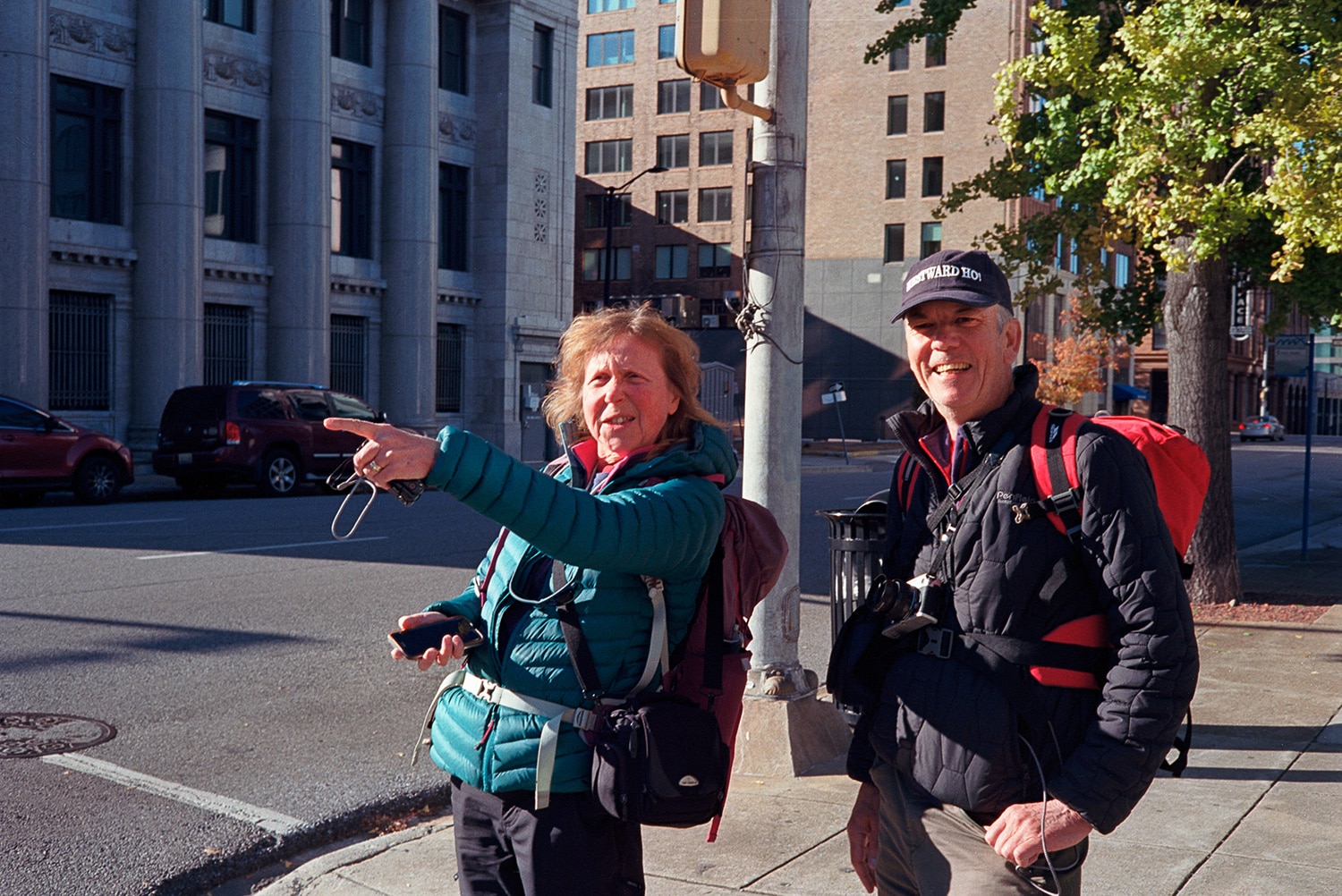
Birmingham Alabama, taken by street photographer, Justin Morrison.
We are walking through the city on our way to catch the train, carrying all our kit with us.
follow us into the wild green yonder …
How we manage a 3-month trip with just two light-weight bags.
Birmingham Alabama, taken by street photographer, Justin Morrison.
We are walking through the city on our way to catch the train, carrying all our kit with us.
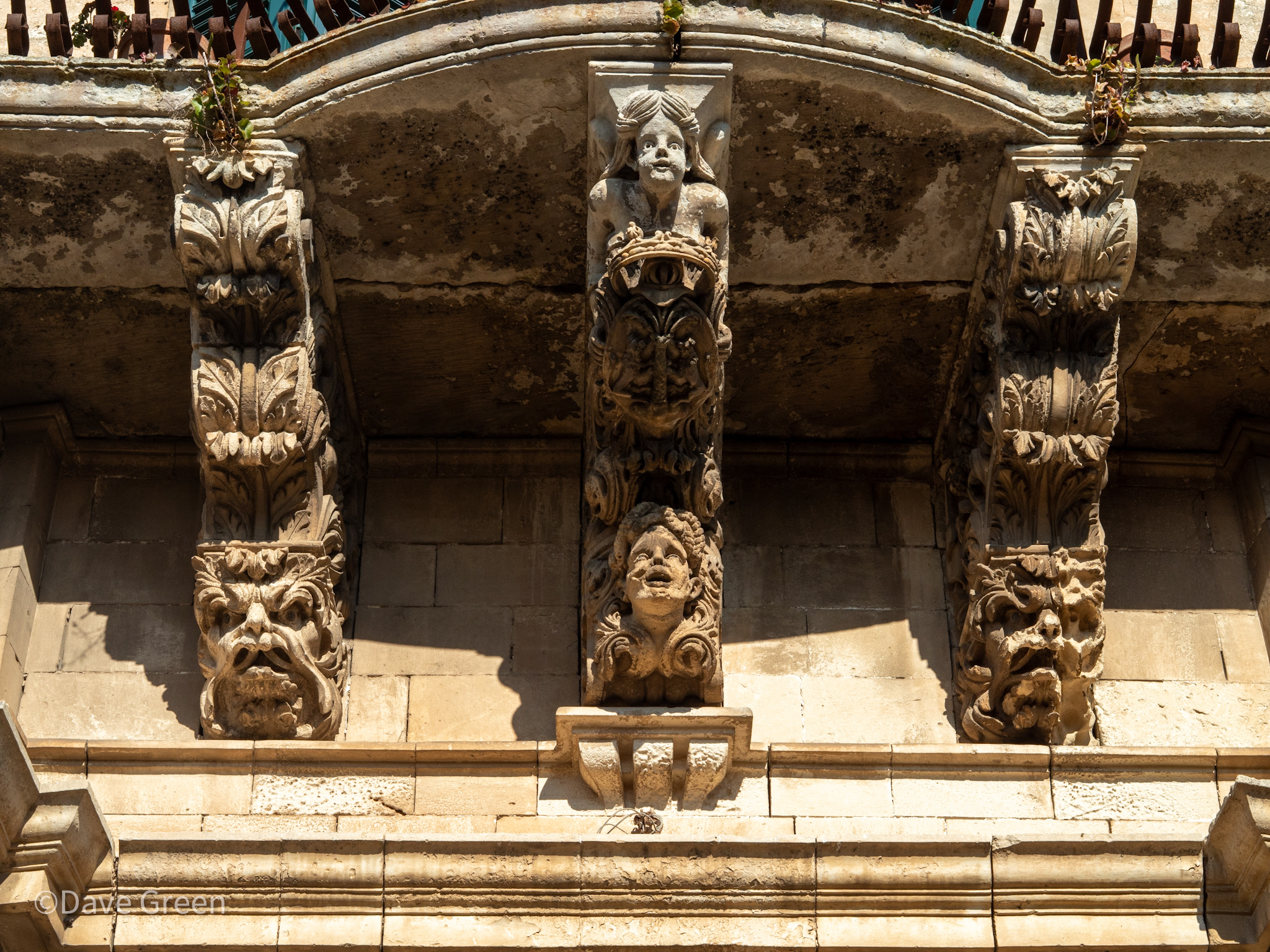
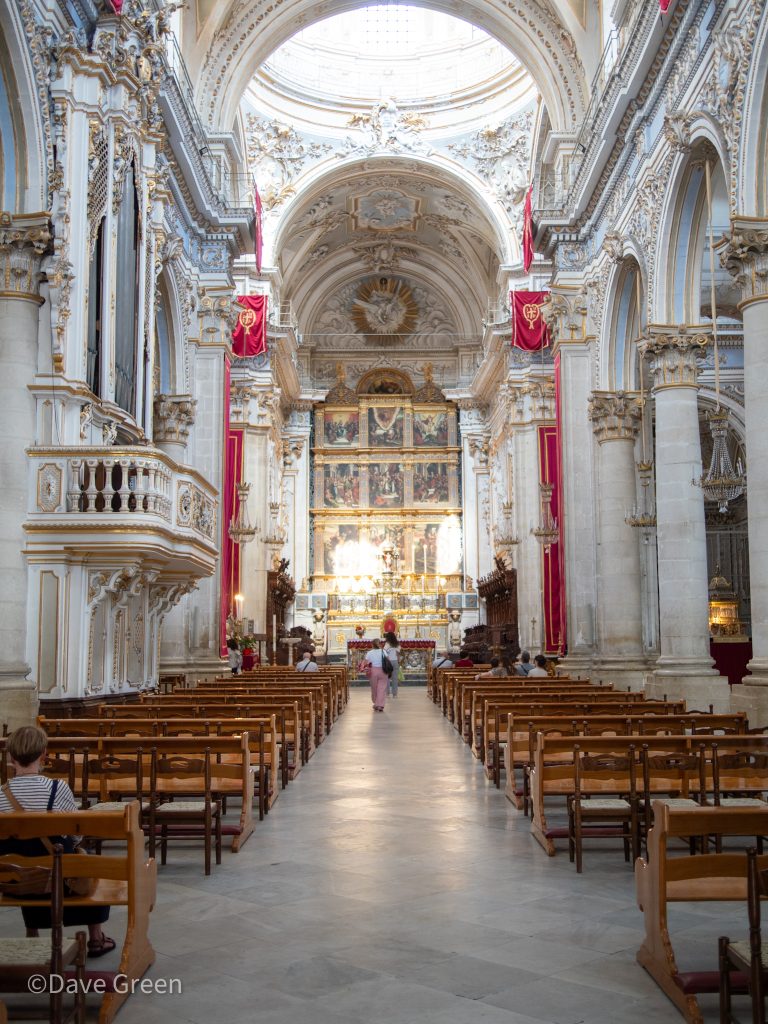
From Siracusa we took a couple of days to explore the Sicilian Baroque, via trains, to the towns of Ragusa, Modica, Scicli and Noto. They all have their own character and charm. The Sicilian Baroque, is unique, and was designed and built through a building spree that was instigated by a massive earthquake which destroyed most of what was there before it struck in 1693. At the time Sicily was under Spanish rule and governed by a wealthy and often extravagant aristocracy. The localised artistic movement only lasted for 50 years before being replaced by the fashionable neoclassicism.
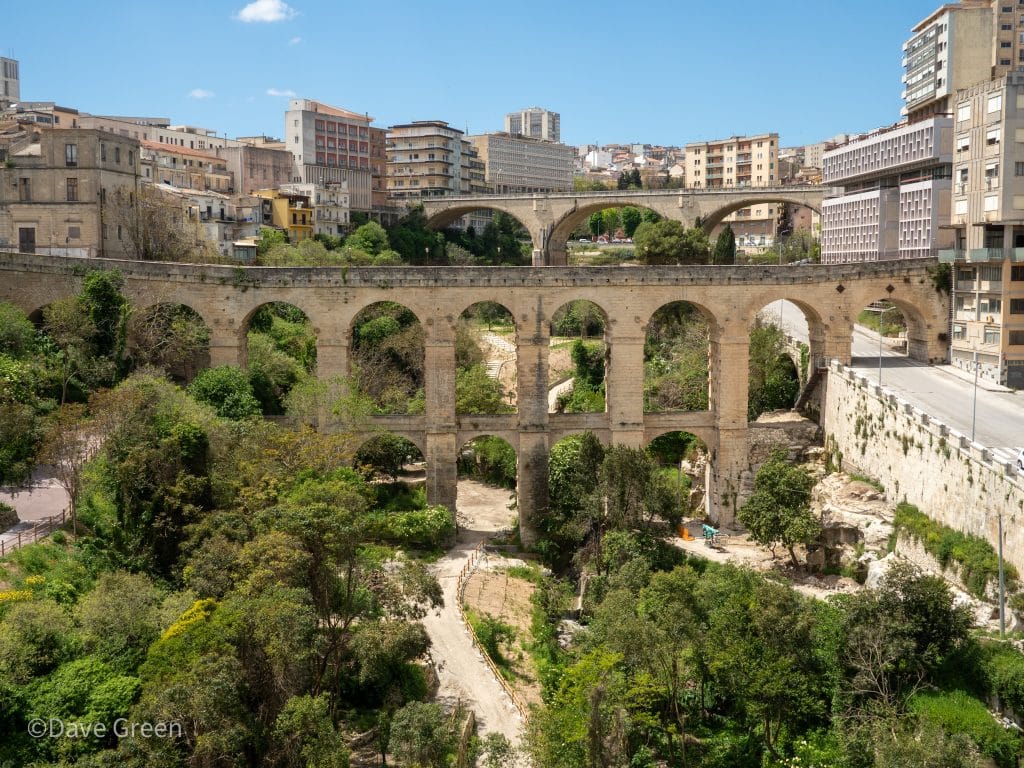
Our first stop was Ragusa, a town split in two. The new town, dating back to the early 18th century see and the old town, which is made of many buildings post earthquake but still holds on to the remnants of its past. The train station is in the new town and we made our way down, across the gorge and up into the old town. We had briefly travelled the gorge on our journey as the train came into town. We got a glimpse of it, and the historic bridge, as the train came out of a tunnel and into another; and then completed whole circle to rise up to street level.
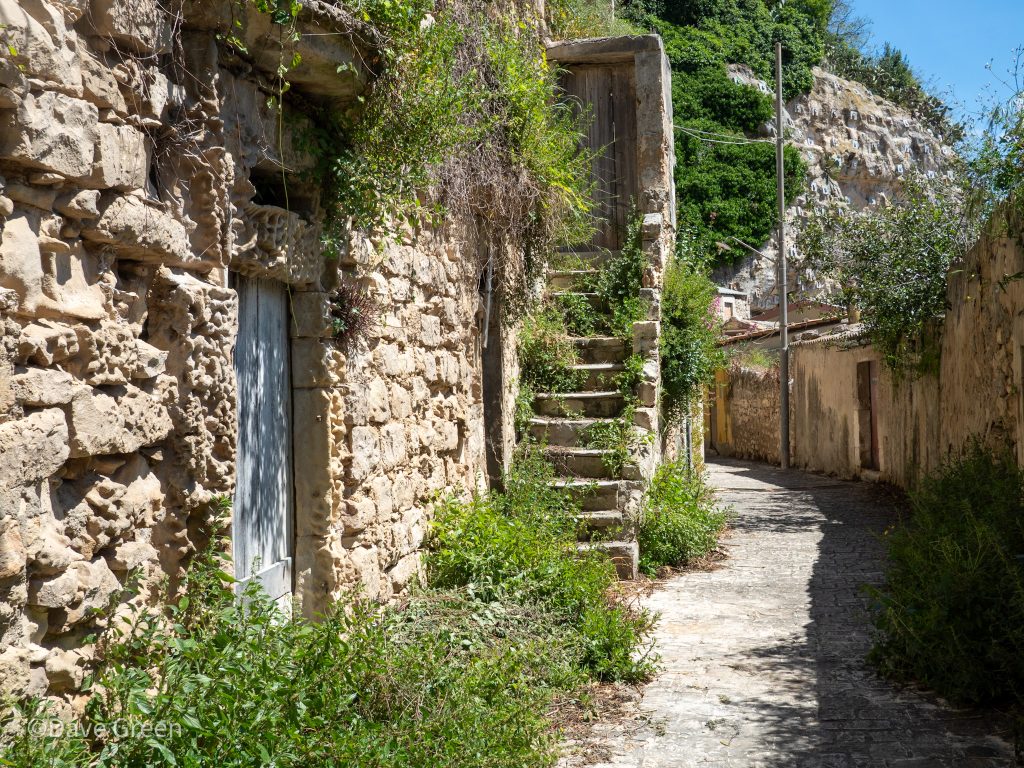
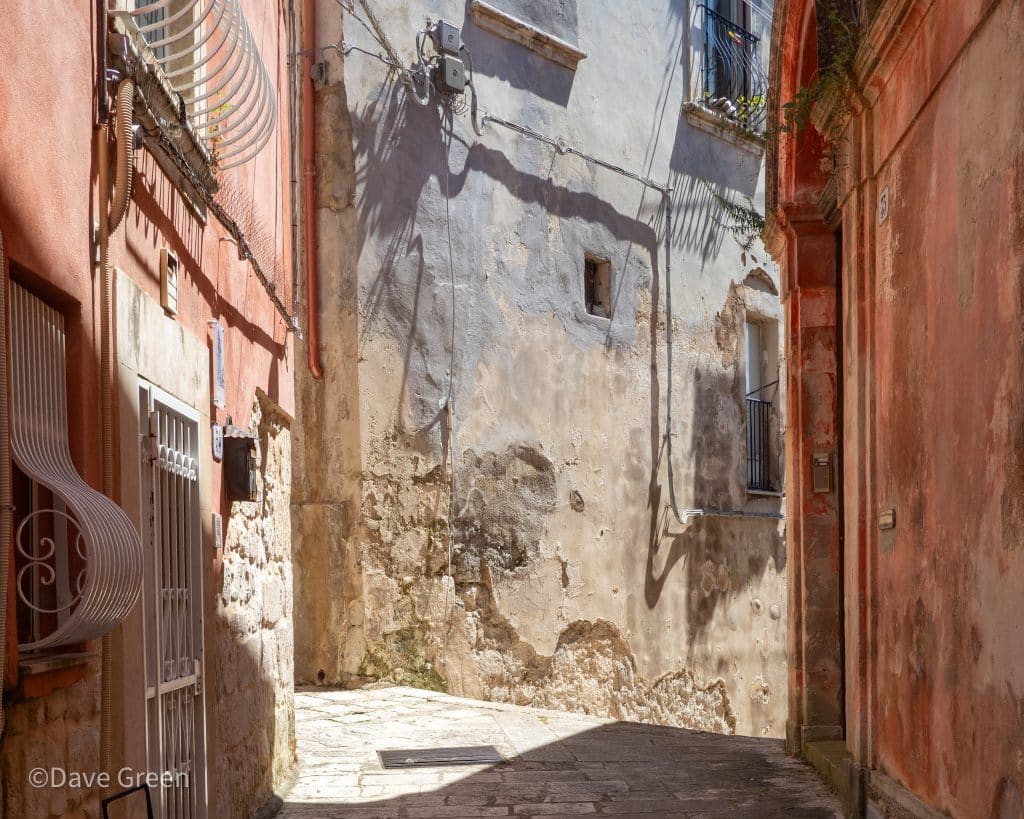
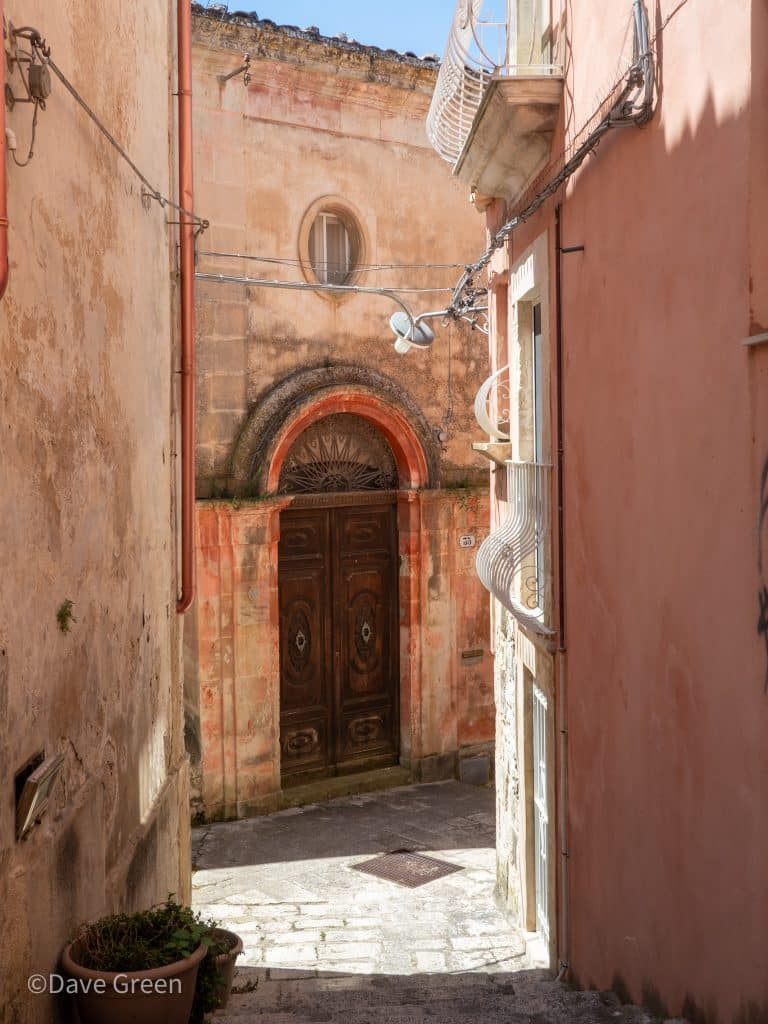
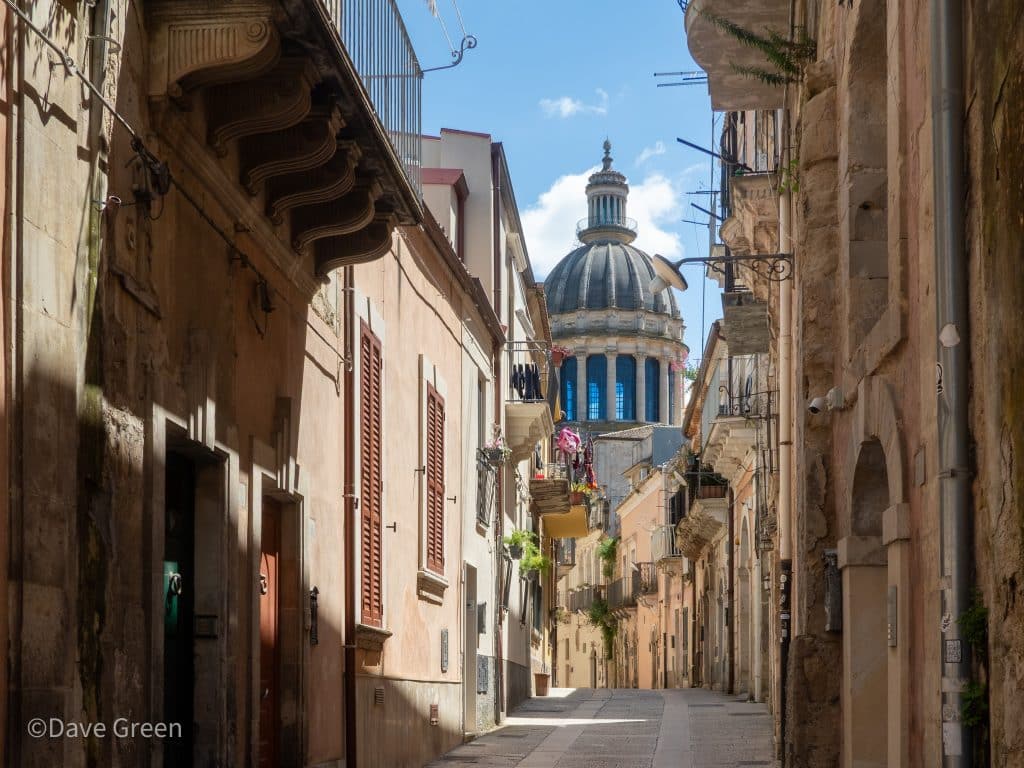
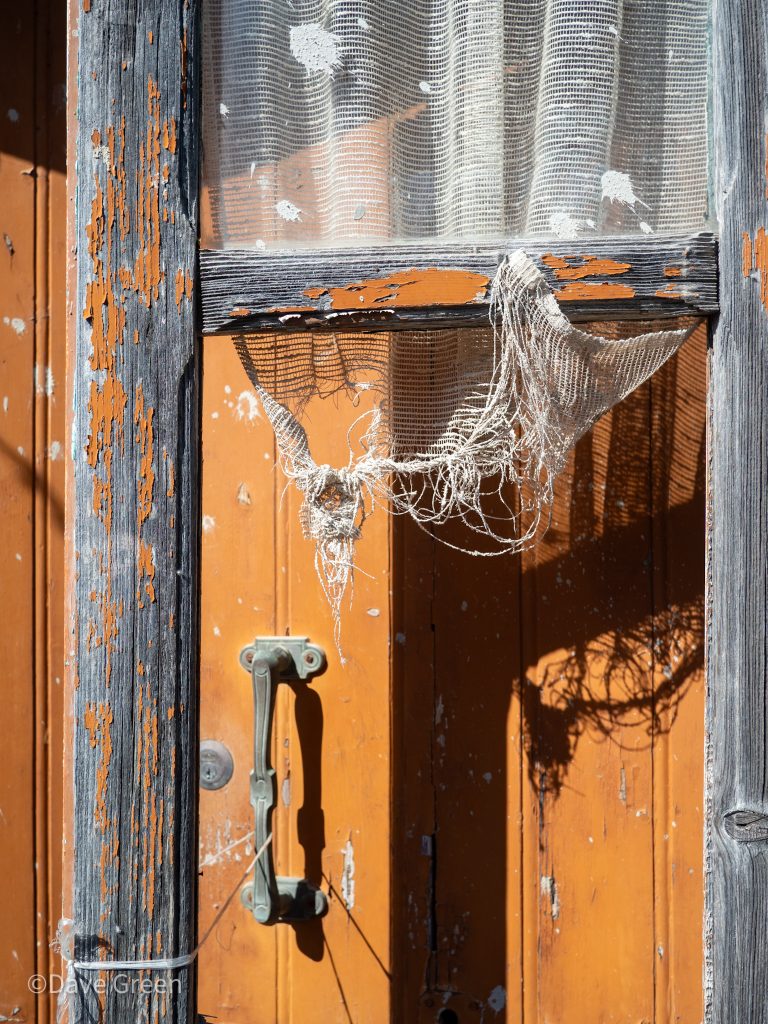
Making our route using Topo GPS we got to have a totally different experience than the rest of the tourists, a wiggly route down the gorge from the new town to the bridge which crossed it. This was a street called ‘Via Velardo’, which I’m guessing was built at the same period as the old town but was now derelict. By street, I’m referring to right of way between buildings. You certainly wouldn’t be able to drive along this one as it was narrow, had many flights of stairs and hairpin bends. I had many déjà vu moments as we passed lines of broken cautionary tape, thinking this may be a through way that no longer existed. However, everything was good, if a little dilapidated and overgrown.
Our experience of the old Town was one of your portions. As soon as we emerged from the narrow alleyways up to the grand Central area, it was teaming with tourists. It’s not the crowds that were objectionable, but the tourist ‘attractions’ associated with them. The land train that kept driving around full of screaming pleasure seekers being egged on by the passers by.
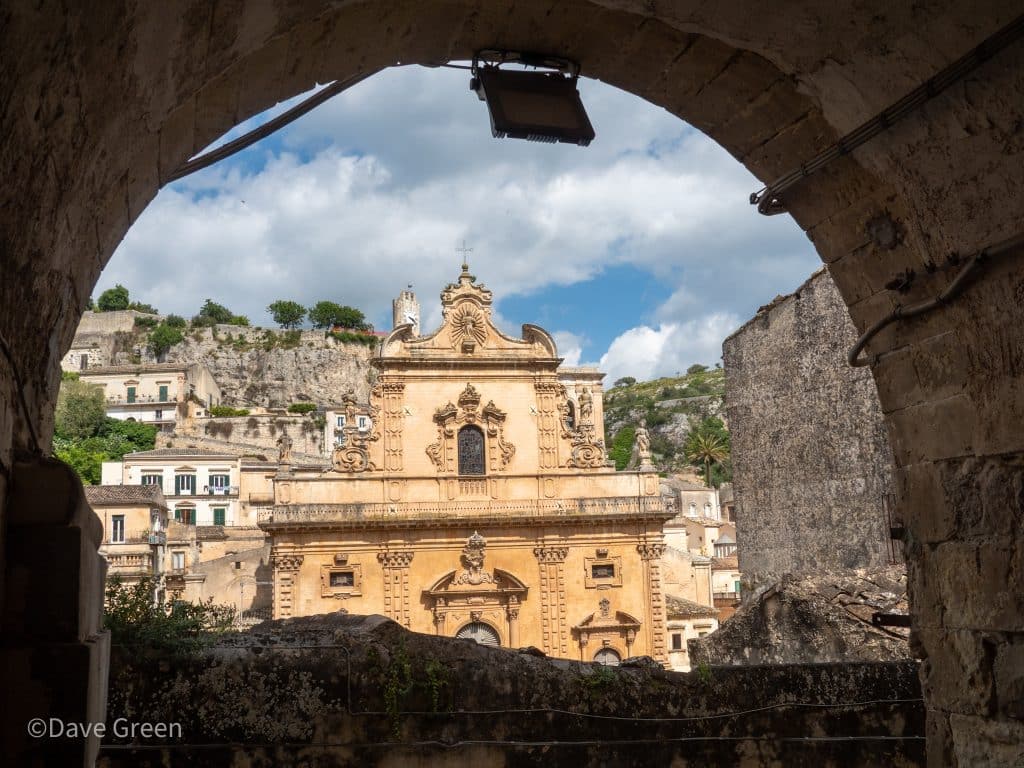
Modica, is a lot better in this respect. It was a far smaller place but there was still the sense of the train station being in the newer area and our destination being up, down, across and then up again to the older town higher on the hill. There was still a tourist area, around the ‘Duomo di San Giorgio’ but we climbed up through the maze of narrow passage ways to the top, and edge, of the town. We stopped for a break at the ‘Piazza San Giovanni’ for coffee, tea and then to buy special handmade Modica chocolate.
We were flagging by the time we got to Scicli, a far smaller place that we didn’t really do justice too. We did find our way to the Caravan public house, which has their own tiny brewery, and had a ‘picola’ of their Easy session IPL, like an IPA, lager and sour combined into one. They can only brew one beer at a time so this was our only choice on tap.
The following day we just went to Noto. Our last day in Siracusa and this town was only 35 minutes away on the train. We loved Noto. There were similarities in the Sicilian Baroque of the other three towns, but this was on a far grander scale. For such a small place it was breath taking. After a 12 minute walk from the station you entered via a huge solid arch. Now on the ‘Corso V. Emanuele’ you were surrounded both sides of the pedestrian only street with the finest examples of Sicilian Baroque. The town is built on the side of the hill but this street and the other major ones are all parallel with each other and are flat. Looking to our right there were smaller, narrower streets and pathways going uphill. It made the cathedral ‘Cattedrale di San Nicolò’ even more imposing with steps going up to it. This was opposite another architectural delight Noto Town Hall ‘Palazzo Ducezio (Comune di Noto)‘. All the buildings had a golden creamy glow to them and the ornate stonework made ideal nesting places for housemartins and pigeons which have probably been coming here for the last 300 years.
Popularised by British artists and writers in the 17th-19th centuries.
We’re back adventuring in Europe by railroad this time. A month away doing The Grand Tour!
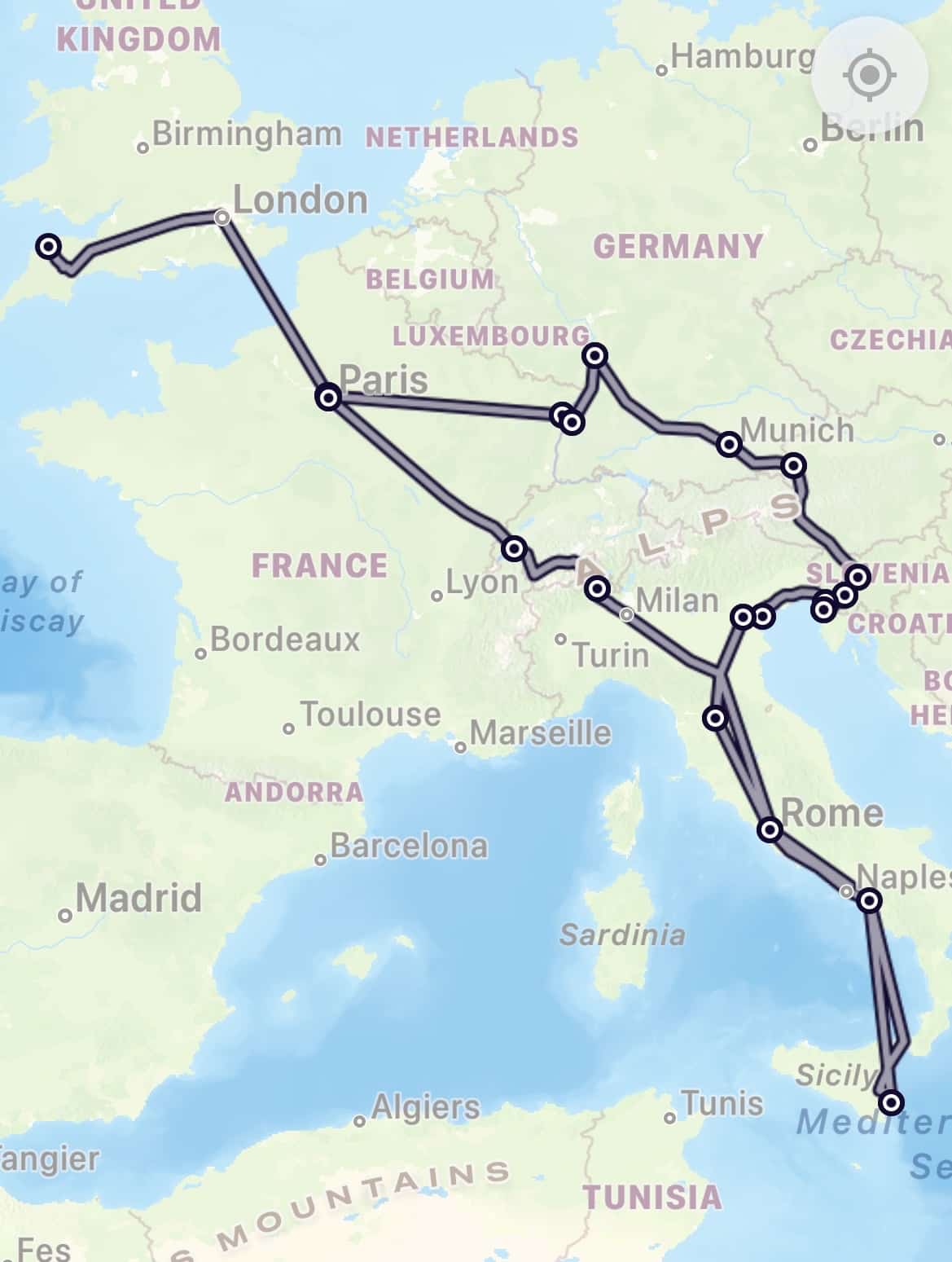
We bought month-long Interrail passes, called a global pass, well in advance when they were 25% off and started to plan our journey. We wanted to see things that we had never seen before travelling where we had never trod. Timing was critical, intended as a respite from winter in England, we didn’t want to go too early risking cold wet weather elsewhere, or too late, when the summer is close and North Devon is the best place to be in the world. We wanted to travel south to keep our backpacks light and free of winter woollies, and wanted to avoid Easter when travel and accommodation can be more difficult. So with Easter coming early and sat off from home on Monday 13th April. We left Bideford at 5.45am catching the bus to Barnstaple, where we caught our first train booked on our Interrail Global Pass at 6.25am. Our journey took us via London, the Channel Tunnel, and Paris arriving at Lausanne on Lake Geneva, Switzerland at 9.45pm where we had an AirBnB booked.
Our journey from here is set out in the map, travelling the length and breath of Italy, into Slovenia, and back home through Austria, Germany and France.
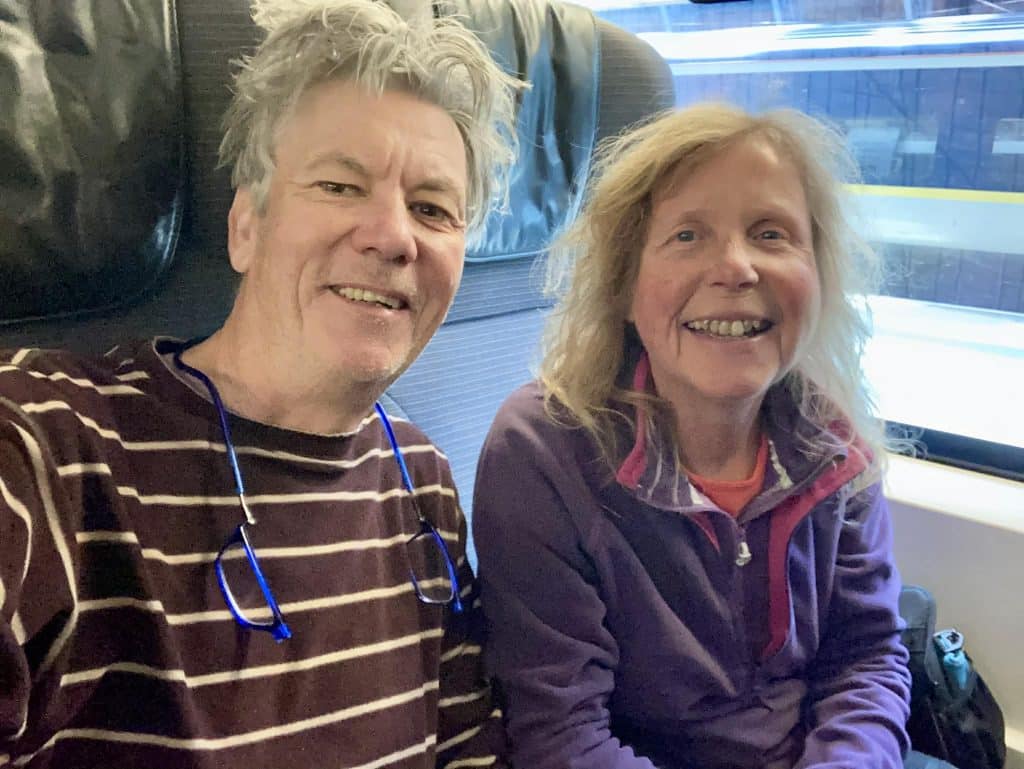
Sitting on the Eurostar waiting to leave St Pancreas Station, London.